What is the next step in the Ohio Eviction Process?
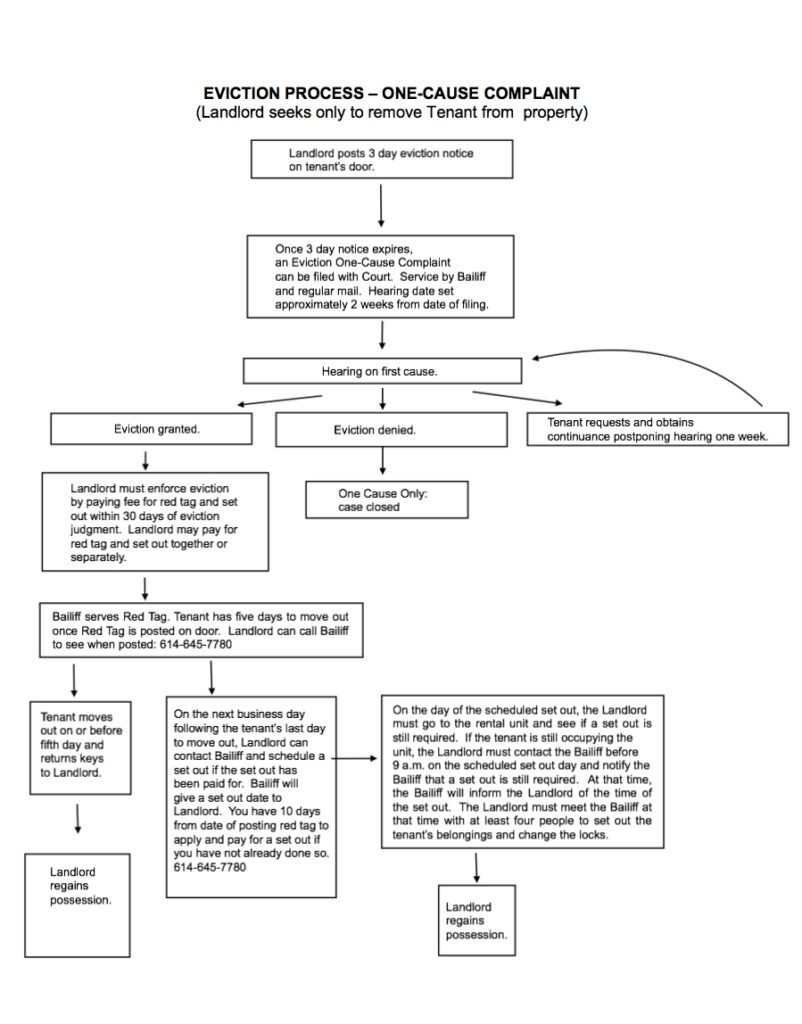
In Franklin County, Ohio, I have outlined the basic steps in the eviction process below. Different counties in Ohio proceed a little differently, but these are the basic steps in the eviction process.
If your eviction requires a 30 day notice, post the 30 day notice on the door, take a picture of it and keep a copy of the notice. If your eviction case does not require a 30 day notice, skip to step #3 below. 30 day notices are required if you are terminating a month to month tenancy and where a tenant has failed to live up to his/her obligations under ORC 5321.05. In most other cases, a 3 day notice is sufficient and this includes cases involving nonpayment of rent.
Post the three day eviction notice on the tenant’s door (after a breach of the lease or after the 30 day notice above has fully expired). Every eviction starts with posting an eviction notice.
Once the three day eviction notice fully expires, file an eviction complaint with the court. Once the eviction notice expires, the landlord has the right to file an eviction complaint with the court if the tenant has failed to vacate the premises and/or has failed to correct the breach of lease leading to the posting of the eviction notice. If you file an eviction complaint prior to the eviction notice expiring, your case will be dismissed and you get to start all over.
Attend the eviction hearing. An eviction hearing is usually scheduled within three weeks plus a couple few days of filing the eviction complaint with the court. At the hearing, the court will decide who gets possession of the rental premises. The court will not decide what is owed to determine damages at this hearing.
How do I know when my hearing is? Almost every court has a website with a “case search” function. For example, Franklin County, Ohio has a website with a case search function. Simply, type in your tenant’s name or your name or company name and search for your case. The first four numbers of the case number are the year in which it was filed. For eviction cases, the three letters following the year are CVG.
Apply for a writ of restitution and/or set out. If the court grants the eviction, the landlord then applies for a writ of restitution and/or set out.
Wait for the bailiff to post the writ (aka red tag). Best case scenario, the bailiff posts two business days after you apply for the red tag. Worst case scenario, the bailiff is busy and it takes a week or longer to get the red tag posted. Once the red tag is posted, then you wait for the writ of restitution/red tag to expire. In Franklin County, the red tag expires 5 days after posting (the day of posting and weekends and holidays count in the 5 days). If the tenant is still in the property, schedule a set out with the bailiff. YOU CANNOT CONDUCT A SET OUT ON YOUR OWN. A set out must be conducted under the bailiff’s supervision. You can contact the bailiff between 8am and 930am on weekdays at 614-645-7780 in order to schedule a set out. If the tenant violated a written agreed entry then you can call the bailiff immediately (you don’t have to wait for the red tag to expire) and schedule a set out. The bailiff’s schedule will determine when the set out happens. The bailiff is generally not able to do a set out immediately. You may have to wait a couple days to a week for the set out to occur.
Under the bailiff’s supervision, set the tenant out if necessary. The tenant generally has 5 days in Franklin County to vacate the property after the landlord applies for the writ of restitution (red tag). If the tenant fails to do vacate by the court’s deadline, the landlord would apply for and schedule a set out with the bailiff of the court. The bailiff will require the landlord to have at least 4 people at the set out to move the tenant’s belongings out.